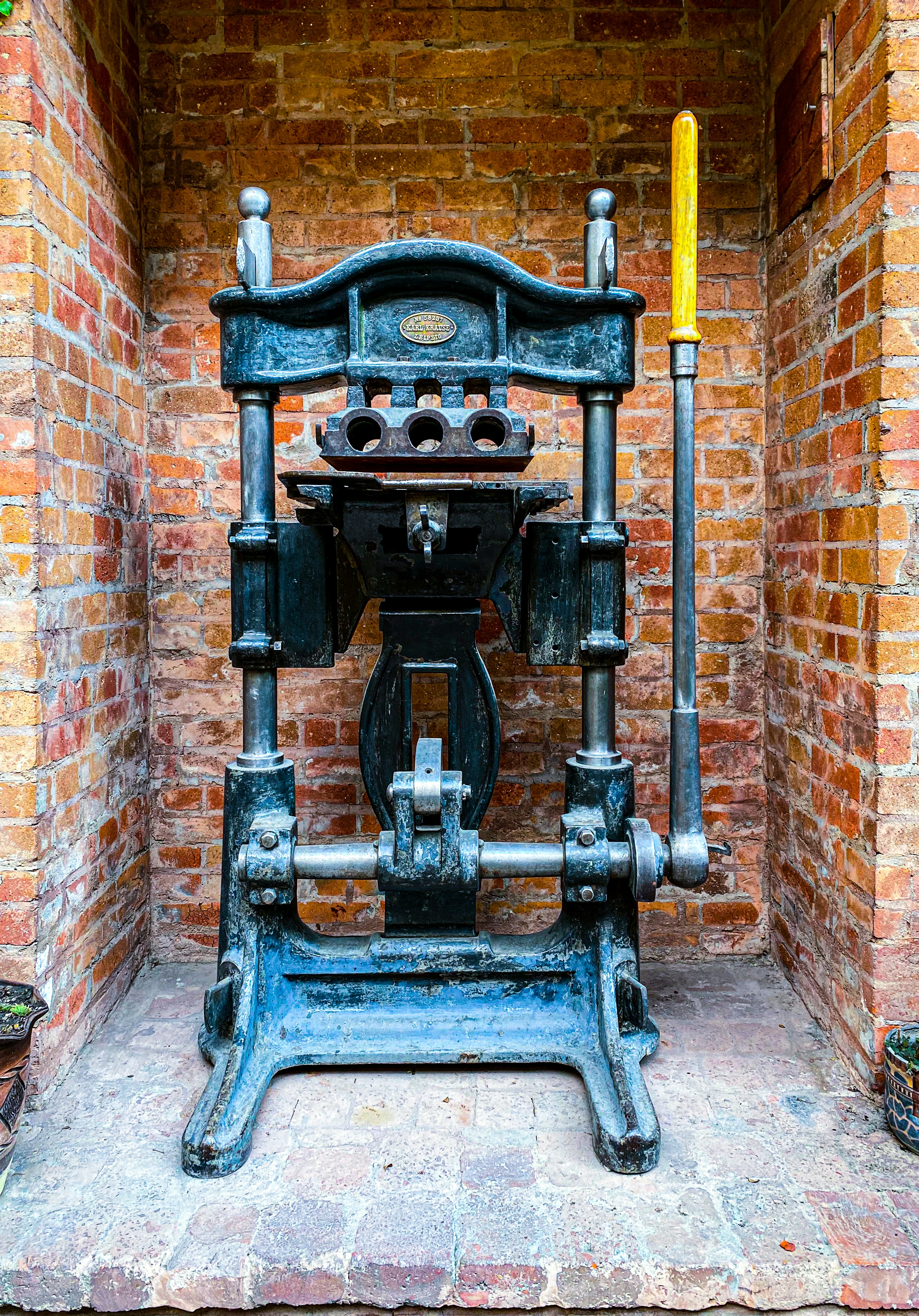
Introduction to Eccentric Press
Eccentric press are a specialized type of mechanical press distinguished by their unique design and operational capabilities. They utilize a rotating eccentric mechanism to convert rotary motion into linear motion, enabling them to exert significant force on materials during various manufacturing processes. This innovative design allows for a wide range of applications, particularly in heavy industry, where efficiency and precision are paramount.
The history of eccentric press dates back to the industrial revolution, when mechanical innovations transformed traditional manufacturing. They evolved from simpler designs, such as hand-operated tools, into complex machines integrating advanced engineering principles. Over the decades, numerous enhancements have been introduced, including the advent of servo press, which offer improved control and efficiency compared to their mechanical counterparts. This evolution highlights the continuous improvement of press technology to meet the demands of contemporary manufacturing processes.
Eccentric press are particularly valued for their speed and force generation, making them ideal for tasks such as stamping, punching, and forming. The distinctive action of the eccentric mechanism enables these machines to apply tremendous pressure while operating at relatively high speeds, thus maximizing productivity. Unlike link motion press that rely on a different mechanical design, or knuckle joint press which offer specific action configurations, eccentric press provide a compelling balance of speed and force, resulting in a versatile tool within the production line.
Moreover, the relevance of eccentric press within heavy industry cannot be overstated. With their application across sectors including automotive, aerospace, and metal fabrication, these machines play a crucial role in optimizing manufacturing processes. Their adaptability to various material types and product specifications elevates them as indispensable assets in modern industrial operations, ensuring enduring productivity and precision in manufacturing outputs.
Application Areas of Eccentric Press
Eccentric press are integral to a variety of sectors within heavy industry, demonstrating versatility and efficiency across numerous applications. These machines excel particularly in automotive manufacturing, where they are utilized for stamping out body panels, various components, and other intricate parts essential for vehicle assembly. The precise mechanical action delivered by eccentric press ensures high-quality production, making them indispensable in a sector that demands reliability and precision.
In the metalworking industry, eccentric press play a crucial role in fabricating metal components. They are commonly employed in processes such as blanking, punching, and bending, facilitating the transformation of raw metal sheets into finished products. The knuckle joint mechanism in some models enhances the force and control during operation, allowing for complex tasks to be accomplished with relative ease. Therefore, these press are vital for producing machinery, structural elements, and consumer goods.
Another significant application of eccentric press is in the packaging sector, where they are used to create various packaging materials and containers. Their ability to efficiently perform tasks such as forming and sealing makes them ideal for producing packaging for food, pharmaceuticals, and consumer goods. Moreover, the integration of servo press technology in some eccentric press further enhances precision and speed, catering to the fast-paced demands of the packaging industry.
In addition to these sectors, eccentric press find their usage in other areas, such as electronics manufacturing, appliance production, and even small-scale operations requiring metal shaping and forming. Their adaptability to various tasks underscores their importance in modern manufacturing processes. Given these widespread applications, it is evident that eccentric press are vital machines that contribute significantly to the efficiency and productivity of heavy industry.
Advantages of Using Eccentric Presses in Heavy Industry
Eccentric press have established a significant foothold in heavy industry due to their numerous advantages. One of the most prominent features of these machines is their capability for high-speed operation. The eccentric mechanism facilitates rapid movements, allowing for quicker cycle times when forming various materials. This speed is essential in environments where efficiency and productivity are critical components of operational success. Furthermore, the ability of eccentric press to handle large volumes of material in a shorter period contributes to the overall efficiency of production processes.
Another vital advantage is the precision in shaping materials that eccentric press offer. The mechanical design allows for consistent force distribution throughout the stroke, which results in uniform shaping and forming of workpieces. This level of precision is particularly important in applications where tolerances are strict, ensuring that the finished products meet required specifications. In comparison to other types of press, such as knuckle joint or servo press, the eccentric press demonstrates an extraordinary capacity for detailed work while maintaining speed and efficiency.
Cost-effectiveness also plays a significant rolе in the selection of eccentric press for heavy industry operations. These machines often require lower initial investments and possess lower maintenance costs over time compared to their counterparts. In addition, the durability and reliability of eccentric press mean that they can operate over extended periods with minimal downtime, further enhancing their overall economic viability. Their suitability for mass production is another aspect that distinguishes them in heavy industrial environments. Eccentric press can consistently produce high volumes while maintaining product quality, thereby streamlining production cycles.
While there are potential limitations, such as energy consumption and the need for appropriate tooling adjustments, the advantages of employing eccentric press far outweigh these concerns. In conclusion, the benefits they present—speed, precision, cost-effectiveness, and mass production capabilities—make them an invaluable asset in the heavy industry landscape.
Working Principle of Eccentric Press
Eccentric press are an essential component within heavy industry, providing an efficient means of applying significant force on workpieces. At the core of these machines lies a drive system that facilitates the conversion of rotary motion into linear motion, effectively delivering power to the mechanical press. The primary components of an eccentric press include the drive motor, a connecting rod, and a crank mechanism that together ensure the operational efficiency of the press.
The drive system typically consists of an electric motor that generates rotary motion. This motion is transmitted through a series of gears to the crank mechanism, which plays a vital role in the system. The crank mechanism consists of a rotating disc or wheel connected to the drive motor. As the motor turns the crank, it causes the connecting rod to move in a reciprocating manner. This movement ultimately transfers forces to the ram of the press, which descends to perform the intended work on the material.
One distinguishing feature of eccentric press is the link motion press design, which optimizes the stroke of the ram for enhanced efficiency. This mechanism allows for controlled movement, minimizing the risk of overshooting the desired position while maximizing energy transfer to the workpiece. Moreover, the usage of knuckle joint designs in some eccentric press provides additional mechanical advantage during operations, facilitating greater force application during the working stroke.
The ability of eccentric press to apply substantial force is further enhanced by their robust construction. The design and engineering of these machines ensure durability and stability, making them well-suited for tough industrial applications. The precise operation of the eccentric mechanism is crucial for achieving high-quality outcomes in stamping, forging, and forming processes across various manufacturing industries.
Types of Eccentric Press
Eccentric press are essential machines utilized in various heavy industry applications, offering diverse functionalities to meet different manufacturing needs. The primary classifications of eccentric press include single crank, double crank, hydraulic, and mechanical press, each offering unique advantages depending on the specific application. Understanding these types is crucial for manufacturers aiming to optimize productivity.
The single crank eccentric press is characterized by its straightforward design, which usually involves a single crank mechanism. This type efficiently converts rotary motion into linear motion, making it particularly effective for lighter materials or simpler operations, such as stamping and blanking. The simplicity of the single crank design also leads to lower initial costs and easier maintenance, making it an ideal choice for small-scale operations.
In contrast, the double crank eccentric press features two cranks, enhancing the capabilities of the single crank version. This design allows for a more continuous operation and the ability to handle larger and heavier workpieces. Double crank press are well-suited for applications requiring more force, such as deep drawing or forming complex shapes. Their robust nature makes them ideal for high-volume production environments, maximizing efficiency without compromising precision.
An alternative to traditional mechanical designs is the hydraulic eccentric press. This type utilizes hydraulic systems to generate force, offering higher flexibility and control over the pressing process. Hydraulic press can adjust their stroke length and force, making them advantageous for applications that require varying levels of pressure. They are commonly used in industries such as automotive and aerospace, where precision and adaptability are paramount.
Lastly, the knuckle joint press is another variant worth mentioning. This press type employs a knuckle joint mechanism, allowing for a smooth transition of force and extended stroke compared to conventional designs. Knuckle joint press excel in applications like high-speed stamping, where quick cycles are essential. Overall, each type of eccentric press plays a vital role in heavy industry, contributing to the efficiency and effectiveness of manufacturing processes.
Product Ranges of Eccentric Press Manufacturers
Eccentric press are a staple in heavy industry, and several manufacturers have developed diverse product ranges to cater to varying industrial needs. These product lines typically include mechanical press, servo press, link motion press, and knuckle joint press, each designed for specific applications and material processing requirements. Prominent manufacturers distinguish themselves by offering unique features, specifications, and customization options.
Mechanical press, for instance, are characterized by their simple design and robust performance. They generally feature a fixed stroke, making them suitable for high-speed operations that require consistent output. Manufacturers often provide a range of tonnage options, allowing them to cater to light, medium, and heavy-duty applications. Servo press, on the other hand, have gained popularity for their ability to offer precision control through digitally operated servomotors. This enables manufacturers to adjust parameters in real-time, enhancing productivity and reducing waste.
Link motion press are designed to produce a unique motion that ensures the punch stays in contact with the workpiece, allowing for efficient and controlled material deformation. This type often finds its application in intricate forming processes where accuracy is paramount. Knuckle joint press are known for their impressive power and flexibility, making them ideal for difficult stamping and forming tasks in sectors such as automotive and aerospace.
In addition to the basic machine options, many eccentric press manufacturers offer a variety of optional features that enhance functionality. These include advanced control systems, automation integrations, and safety enhancements, thereby ensuring that manufacturers can select equipment tailored to their production requirements. The wide range of eccentric press options available from these manufacturers enables users to invest in a solution that best fits their operational needs, thereby maximizing efficiency and productivity in heavy industrial environments.
Case Studies of Eccentric Press Applications
Eccentric press hold a significant position in heavy industry due to their versatility and efficiency, as demonstrated through various case studies. One notable application occurred in the automotive manufacturing industry, where a leading manufacturer faced challenges with high-volume production of metal components. The traditional mechanical press was insufficient, leading to frequent downtimes and quality control issues. After conducting a thorough analysis, the company opted to implement a Link Motion Press configuration, which allowed for more precise control over the stamping process. The results were remarkable: a 30% increase in productivity alongside reduced material wastage, proving the eccentric press’s effectiveness.
Another compelling example can be found in the appliance manufacturing sector. An established firm was struggling with the fabrication of intricate metal parts for home appliances, which required consistent accuracy and minimal defects. The initial trials with a knuckle joint press were fraught with challenges related to energy consumption and cycle times. To address these problems, the company transitioned to a servo press system that utilized advanced control mechanisms. This resulted in an impressive reduction in operational costs by 25%, while simultaneously enhancing the quality of the produced components. The adoption of eccentric press in this case underscored their adaptability to different product ranges.
A final case study showcases the steel industry, where a large manufacturer was encountering significant issues with repetitive stress injuries among operators handling heavy material components. By integrating an eccentric press equipped with advanced safety features and ergonomic design, the company not only improved worker safety but also achieved higher output levels. This case highlights how the implementation of eccentric press can directly lead to improved working conditions, alongside operational efficiency. Such real-world implementations emphasize the vast potential and advantages of incorporating eccentric press within various heavy industrial applications.
Maintenance and Safety Considerations
Ensuring the optimal performance of eccentric press in heavy industry necessitates rigorous maintenance and safety protocols. These mechanical press systems, whether they are servo press or link motion press, are essential for various manufacturing processes. Consequently, neglecting their upkeep can lead to operational inefficiencies, increased costs, and potential hazards.
Regular maintenance schedules should be established to ensure that all components of the eccentric press, including the knuckle joint, drive systems, and die components, remain in optimal working condition. This includes checking for wear and tear, lubricating moving parts, and inspecting electronic systems for faults. Implementing predictive maintenance techniques can prove beneficial. By using sensors to monitor the performance of the machine, operators can identify issues before they escalate into more serious problems. Moreover, routine calibration of the machines is essential to maintain precision and accuracy in production.
Safety is paramount when operating any mechanical equipment, including eccentric press. Operators should be trained comprehensively on the proper use of these machines, ensuring they understand the specific characteristics of the equipment they are handling. Furthermore, developing a thorough understanding of safety protocols, including emergency shut-off procedures and the appropriate use of personal protective equipment (PPE), is crucial for a safe working environment.
Common safety issues associated with eccentric press include unguarded moving parts, mechanical failures, and operator error. To mitigate these risks, integrating safety devices such as light curtains, safety mats, and emergency stop buttons is vital. Regular safety audits should also be conducted to evaluate compliance with safety standards and to identify areas for improvement.
In conclusion, maintaining eccentric press through diligent upkeep and fostering a strong safety culture is essential to mitigate risks and enhance operational efficiency in heavy industry.
Future Trends in Eccentric Press Technology
The evolution of eccentric press in heavy industry is anticipated to undergo significant transformation driven by advancements in technology. One of the primary areas of focus is automation. As industries strive for enhanced efficiency, the integration of automated systems into eccentric press, such as servo press, is likely to increase. Automation not only optimizes operational workflows but also minimizes human error, fostering a safer working environment while enabling higher production rates.
In tandem with automation, the realm of digitalization is set to revolutionize how eccentric press function. The incorporation of Internet of Things (IoT) technology facilitates real-time monitoring and data analysis of mechanical press, enhancing predictive maintenance and operational uptime. This connected framework provides engineers with actionable insights into machine performance and allows for more precise adjustments to the manufacturing process, leading to a higher quality of output.
Moreover, emerging materials will play a crucial role in shaping the future capabilities of eccentric press. As manufacturers seek to produce components that are both lightweight and durable, the adaptability of eccentric press must evolve. The utilization of advanced materials that can withstand high levels of stress and strain will enable these machines to expand their application range significantly. For instance, innovative knuckle joint designs may further enhance the mechanical efficiency of press, facilitating the use of eccentric press in industries such as aerospace and automotive.
Furthermore, the exploration of sustainability practices will also influence the development of eccentric press. The push for environmentally friendly practices may lead to innovations in energy efficiency and reduced waste during production, aligning with the broader goals of responsible industrial practices. Overall, the future of eccentric press technology appears promising, with advancements in automation, digitalization, and material science paving the way for enhanced performance and expanded applications.